It has been a while since I last felt the rush of excitement that comes with learning something new. And maybe because of that, it has also been a while since I felt the quiet fear that comes with starting over, of stepping into something unfamiliar.
Growing up, I was taught how to love learning. With both my parents working as teachers, I grew up in an environment where curiosity blossomed and questions were always welcomed. Asking did not always lead to immediate answers, but it was still treated as something meaningful. Learning was less about certainty and more about staying open.
Looking back, that openness may be what first drew me toward questions of truth and meaning. Eventually, this curiosity led me to practice the art of asking questions and uncovering truth as a profession: journalism.
For the past half-decade, I’ve been writing and producing content for national media and broadcast organisations in the Philippines. My days were filled with questions that felt urgent and necessary, questions that I felt had answers that were worth working tirelessly for.
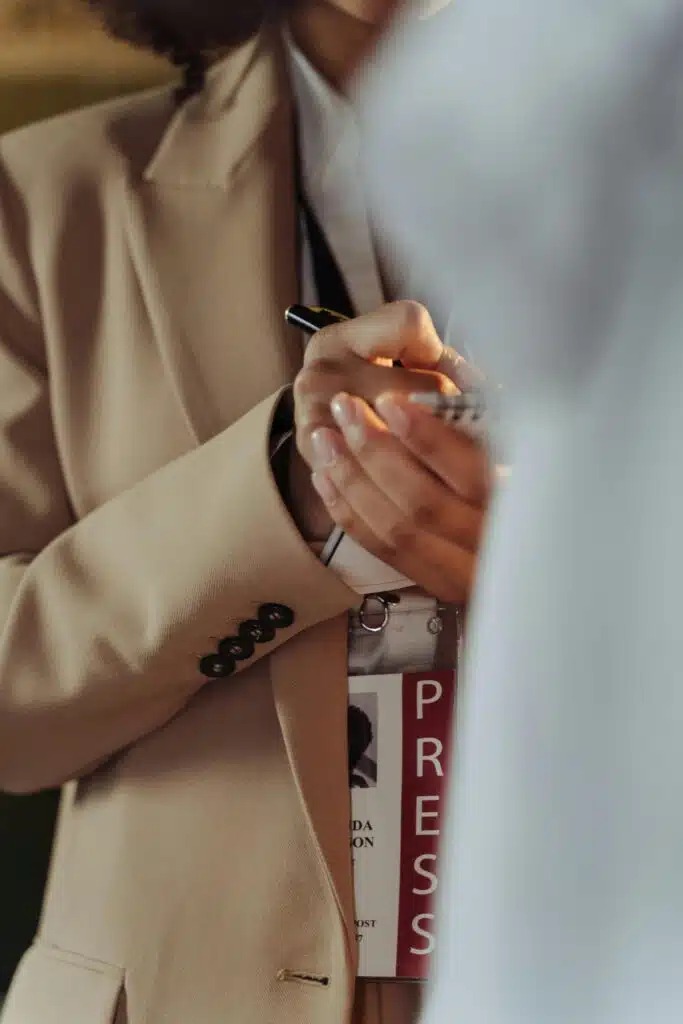
New assignments meant new things to discover, new things to learn. The first few months felt surreal. Not everyone gets to work in their dream profession, and I knew I was lucky. Opportunity and hard work had aligned, and I felt deeply grateful to be right where I wanted to be.
There was a strong sense of purpose in the work I did. I felt content knowing that the articles I published helped inform people as they went about their daily lives.
And yet, despite this passion, life had other plans.
Somewhere along the way, the joy of curiosity began to fade. I’m not sure when it happened. As responsibilities grew, I found myself moving faster but feeling less connected. The pace of newsroom culture slowly drowned out that earlier sense of wonder.
I was still producing stories, but I was no longer lingering with them. Learning became something to complete rather than something to inhabit. I noticed myself growing less empathetic toward the people I wrote for, more detached from the stories I handled every day. It felt as though my own emotions were slowly slipping away. It scared me.
Starting Over
I remember having this casual conversation with my mom after one usual dinner. She brought up this viral post she had seen about a child who died after being hit by a bus along a major highway. My response came automatically: “That’s nothing new. Children die every day. That’s just clickbait.”
I shrugged it off and shut the conversation down. To me, it was a “non-story.”
My family looked at me strangely. “That was a life,” my mom said quietly, before the topic changed.
I stopped and found myself just floating in the moment, like I was there but not present. I know how valuable a life is but I wondered, emotionlessly, why that wasn’t the first thing I thought of.
That moment stayed with me.
I began to realise how much I had started seeing people’s lives as work. Deaths became numbers in a disaster story. Wars became headlines on a to-do list for the next shift.
I had grown so accustomed to detaching that I was forgetting how to feel, how to connect with the very people I was writing for.
I pondered a lot that night. I thought about how I might have reacted before. How I might have asked about what happened to the child. How I would have dived deep into research on road safety policies, searched for accountability, and tried to tell a story that mattered. But I didn’t. And in that absence, I felt hollow.
That was when I knew I needed to step away.
Leaving a job I once felt deeply passionate about was heavy, but I needed a breather before my work became mechanical and set apart from the heart and purpose that once guided it.
So I left my job without a clear plan, only a handful of what-ifs to lead me on.
“What if I focus on what I want to learn?”
“What if I just let my next job find me?”
And somehow it did.
Stepping Into the Unknown
Mag reached out on an ordinary weekday, at a time when I was already sitting with uncertainty about what comes next. Her email looked like any other unread message, but it led me to something I didn’t know I was looking for.
She asked if I could help build a content production system around her practice. The timing was uncanny. The work was unfamiliar. The direction was unclear. But to me, something about it clicked instantly.
I felt a pull toward discovering something I didn’t yet understand. It was a feeling I hadn’t had in a long time. A kind of excitement that came not from knowing, but from not knowing.
What surprised me was how natural it felt to step into uncertainty alongside someone else.
At the beginning, I’ll admit I felt lost. I approached the work the way I had approached journalism: focused on output, numbers, and meeting expectations. But when Mag openly shared about how she’s also learning as we worked, I was positively stunned. I really didn’t think that was an option.
This opened up a whole new point of view for me.
Instead of feeling paralysed by what I didn’t know, I chose to follow her lead. I began approaching the role with curiosity rather than succumbing to the fear of starting over. So I started to look at this new role as someone who was genuinely curious about the practice. I started asking questions. Researching. Slowly connecting with Mag and her team.
I realised that I was happily lost.
The feeling felt new and somewhat familiar. Like finding an old picture of yourself and seeing it with gentler eyes. Yes, we had a goal. Yes, we also didn’t know how to get there. Yet. And somehow, that was okay.
Mag knew what mattered to her in terms of the heart of her work, but not exactly how it should take shape online. I knew how to produce content, but not how that knowledge would translate into her world. Neither of us had a clear map. And yet, neither of us needed one.
What we shared was a willingness to stay curious together.
Unconcealment and Co-Creation
In existential terms, Mag said this is what co-creation looks like. Meaning does not arrive fully formed from one person to another. It emerges in the space between us, through dialogue, responsiveness, and presence. There is no single author of the outcome. The relationship itself becomes the site where something new takes shape—closely aligned with ideas explored in existential therapy for identity and authentic self.
As we continued working, I began to trust the process not because I knew where it was going, but because we were both willing to show up honestly, without pretending to know more than we did. That mutual openness felt grounding. It reminded me that not all work needs to be driven by certainty to be meaningful.
In one of our alignment conversations, I shared this reflection with Magdalen and told her that I was learning more about myself in what we’re doing. She smiled and said that what I was describing sounded very much like therapy.
She told me that therapy is not about one person fixing another. It is two people sitting together, attending to something unfinished. Neither arrives as the expert of the other’s life. Instead, they enter a shared search for understanding, allowing meaning to emerge through conversation.
In existential thought, this unfolding is often described through aletheia, or unconcealment. Truth is not something we grasp all at once. It reveals itself slowly when we remain close to what is lived, felt, and relational.
Working with Magdalen has felt like that. A gradual uncovering, guided not by answers, but by attention.
And in a quiet way, this experience brought me back to the child who learned that asking questions is a form of care. That learning begins not with certainty, but with presence.
If anything, this journey has reminded me that the joy of learning does not disappear. Sometimes, it simply waits for us to step into the unknown again, this time with someone else.
About the Author
Faith Yuen Wei Ragasa
Cats and books — If you asked me to sum myself up in two words, I’d happily stop there. Everything else tends to unfold through the stories I write.
I began writing as a journalist who worked as a digital producer for news organizations based in the Philippines, including the now-closed CNN franchise in the country.
As I step beyond the newsroom and attempt freelancing, I’m giving myself room to learn, try new things, and keep discovering new stories and other ways of telling them.