It seems that, alongside and perhaps partly in response to the traditional psychoanalytic emphasis on the past, contemporary mainstream therapeutic culture increasingly foregrounds the present.
When modern psychotherapy was in its initial theoretical development, more emphasis was placed on digging into the past: the answer to our present distress can be traced, with assumed direct causality, to one’s childhood. The past is conceptualized as the boogeyman; the closet of skeletons people slam shut and hope to never open again.
Talk therapy’s turn towards the “present” reflects multiple influences, including increasing engagement with Eastern philosophies grounded in mindfulness, presence, and embodiment, as well as Western phenomenological and existential traditions.
“Be present.” I’m sure you’ve heard this advice before, whether in movies, on social media, or in books. The fixation with the present pervades mainstream culture—not just within therapy—and for valid reasons.
Mindfulness practices can ease distress by redirecting attention towards immediate embodied experience, creating distance from thoughts, emotions, and anxieties that may otherwise be experienced as literal reality.
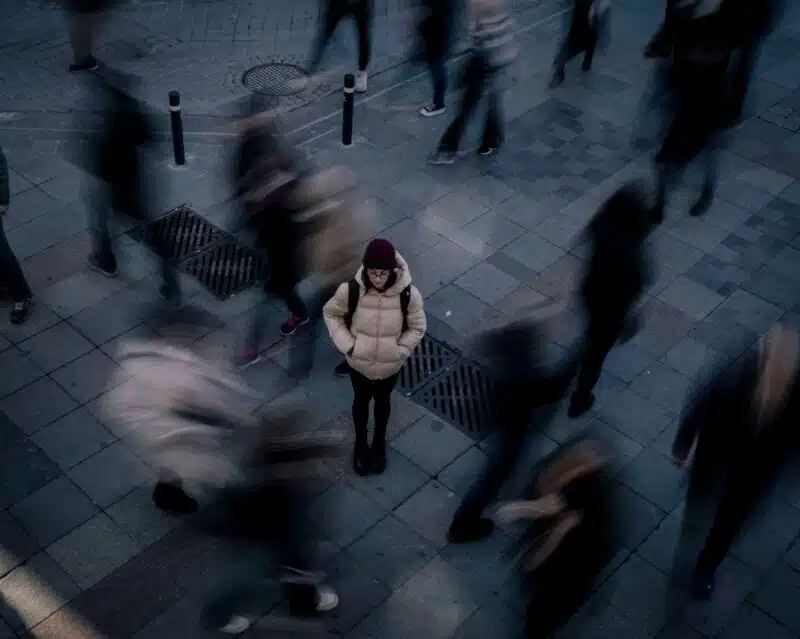
But for many others, staying in the present doesn’t do anything for them, and may even exacerbate their distress. Here, what you do isn’t simply the solution by itself (i.e. focusing your attention in the present moment) but how you do it matters just as much (e.g. focusing gently or forcefully your attention to the present moment).
In the above example, there are several reasons why one might forcefully focus on the present moment. One of which is they might be running from the past.
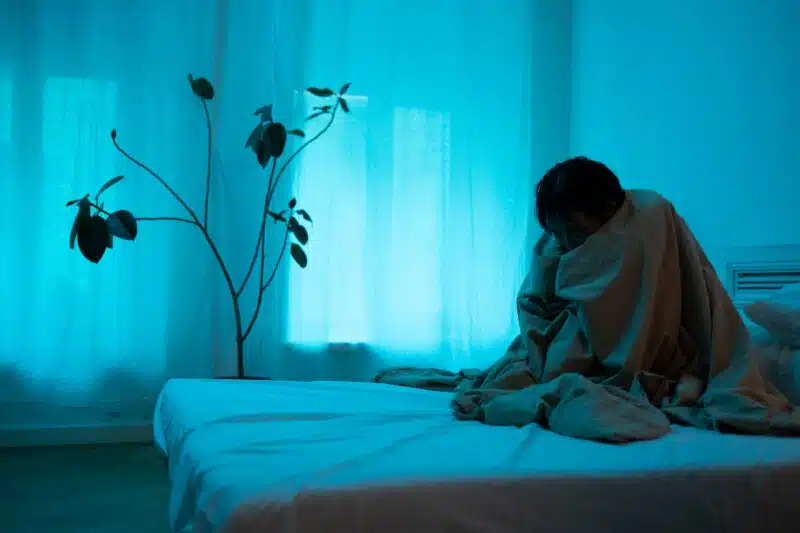
The issue is not that the person is failing to be present. Rather, the past continues to arrive in the present with the same meaning it once held, as though how what happened then was remembered is still the only possible way to understand what happened.
Put another way, notice how despite shifting the object of our attention, we might reaffirm the existing meaning we attribute to time despite our intention to change them: here, the past remains as “bad”, and potentially, becomes “scarier” the harder we try to detach ourselves from it. The present doesn’t become “better” just because we shift our attention to it.
The matter, then, isn’t simply the focus of consciousness, but the meaning we give to time.

Despite their differences, both past-oriented and present-oriented mainstream therapeutic discourses can sometime reinforce a similar assumption: that time exists as a linear progression, a causal relationship, and three discrete bubbles of “past”, “present”, “future”.
Under this perspective, you hear advice like “let go of the past” “just focus on what you can do in the present”, “the future has yet to come”.
We believe, consciously and subconsciously, in a linear fashion, the “past” caused the “present”, and the “present” causes the “future”. There’s certainly some truth to that, but it seems as though we absorb this particular meaning of time as literal or the only way to experience time.
From an existential perspective, however, you cannot only be in the “present” because every “present” is already shaped—and continues to be shaped—by a lived “past” and an anticipated “future”. Phenomenologically, it makes more sense to describe time not as isolated bubbles, but as the-past-as-presently-lived-and-future-directed.
The meanings we attribute to each time bubble are constantly shifting and necessarily co-constitutive, so much so that the boundaries between the bubbles become elusive.
The words “past”, “present”, “future” become reified abstractions, useful for communicating with a common language, but insufficient to capture the complexity of lived temporality.
Here’s an example. You didn’t excel academically in your teenage years. If anything, you did very badly. However, the meaning of this “past” is not set in stone; it is continually reconstituted through your present way of being.
Hypothetically, we can consider two potential paths. In the first, by conventional societal standards, you become successful. In the second, you struggle and are considered unsuccessful. The same “past” now holds very different meanings.
In the first path, you might look back at your poor grades with gratitude. They’ve become a reminder that academic achievement was never the final determinant of your life. What was once experienced as failure is now interpreted as a necessary catalyst for your growth.
In the second path, the same grades remain as evidence of a long, deep-seated fear: no matter what you do, you were and will never be “good enough.” That phase of life and that past self are now experienced as a permanent destiny you cannot escape.
However, even within each path, there isn’t a single stable meaning.
Back to the first path. On one day, after receiving a promotion, you look back at your teenage years with pride. “I’m glad I never gave up.” A week later, after being unexpectedly retrenched, the very same memories take on a different meaning. “Maybe I never changed. I’m never meant to succeed.” Nothing about the past has changed. Yet, the meaning of the past has shifted once again.

Likewise, on the second path you may spend years viewing your school days as evidence of failure. Then, perhaps, after becoming a parent, meeting a mentor, or finding work that genuinely matters to you, those same memories begin to inhabit novel meanings. You may see your past self as a young person who lacked support rather than ability.
While much of the focus thus far is on the “present” and “past”, the same can be said for the “future”. Just as our “past” can influence our “present” decisions, and our “present” way of living can shape our “future”, our imagined “future” can also determine the choices we make “today”, while our “present” experiences continually reshape the meaning we give to our “past”.
The historical facts remain unchanged, the present moment is currently unfolding, the imagined future has yet to happen. But the ways their meanings are understood and lived are constantly open to reinterpretation. In this sense, once again, we never experience any bubble of time in isolation.
Every bubble is experienced in every moment, in varying emphasis, permutation, and meaning—blended and intertwined like a Möbius strip, folding into and revealing each other:
- PAST–present–future
- past–PRESENT–future
- past–present–FUTURE
- preSENT–pASt–future
- pAst–FUTure–preSent
- fuURE–prESEnt–paST
- pRAsTuFesEnTeUrP
(The capitalization represents the temporal horizon that is most salient in any given moment, rather than a chronological sequence)
In some sense, we are not merely time-travellers, but meaning-makers. We don’t simply passively move through time in sequence. Rather, the meanings of our “past”, “present”, and “future” are never completely closed—they remain ever open to reinterpretation, reshaping our lived experience of time.
As I write this, I find myself inhabiting something akin to PAsT–FUturE–prEsent.
Lately, I find myself looking backwards, attempting to search for, clarify, and reacquaint myself with my roots, while imagining a clearer future about the kind of friend, son, and therapist I want to be.
In this pursuit, the “present” day-to-day has been somewhat blurry.
Perhaps this is what it means to be a time traveller. Or perhaps it’s just what young adulthood feels like.
What is your relationship with time? What temporal horizon are you inhabiting?
About the Author

Hello, I’m Gary: A recent Anthropology graduate from Yale-NUS College, and an incoming student pursuing a Masters in Counselling. If I were to describe myself in a sentence — which is impossible, but I’ll try nonetheless — I’m currently someone who’s in a perpetual existential mood!
I invite you to join me on my journey of writing to make sense of that mood, myself, and this crazy, complex world. I’m not following a fixed structure, so I don’t know what I would come out of this conviction — I guess we can only find out as I write!